
Continuously delivering
Moving energy – the Norwegian gas adventure
A new gas day begins at 06.00 every morning. That sets the rhythm for the next 24 hours in the Norwegian gas transport system. Orders are submitted, deliveries planned and the volumes to flow through the pipelines determined. From one morning to the next, the entire system runs on the same clock from offshore fields to terminals in Europe.
The gas day is part of a longer cycle, the gas year, which runs from 1 October to 30 September. Winter is the high season, when energy demand and deliveries to Europe are at their peak. Necessary maintenance and preparations are carried out in the rest of the year, so that the system is ready when the next winter arrives. Even in summer, large volumes of gas are delivered as storage facilities across Europe fill up ahead of the colder months.
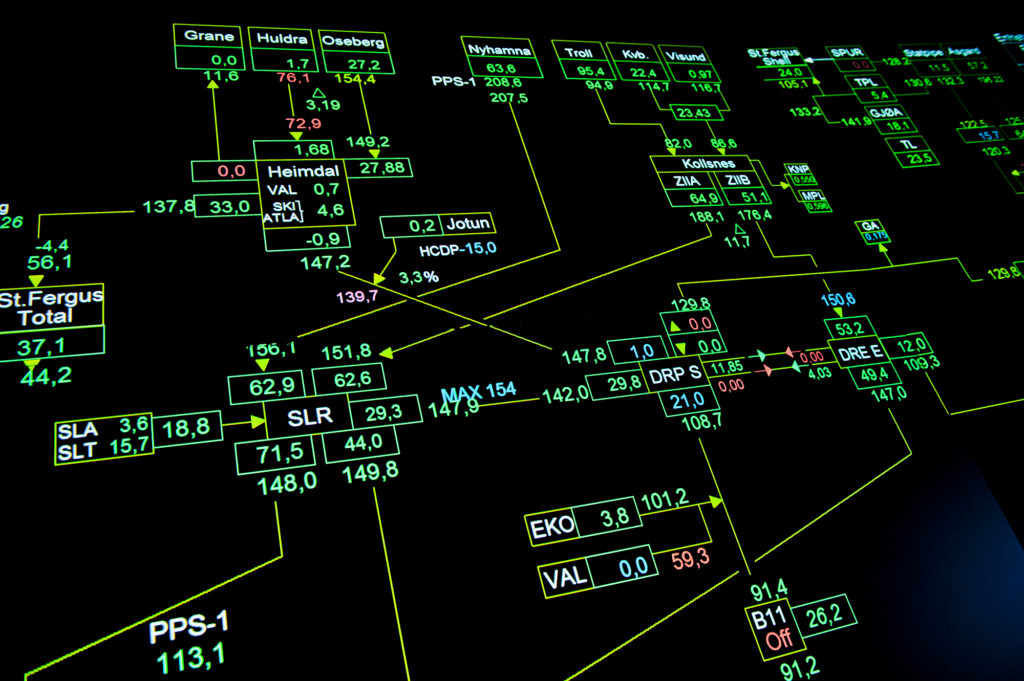
Maintenance is an important part of the whole. Work on platforms, processing plants and terminals must be planned in detail and coordinated across the whole system. The objective is always to minimise the impact on deliveries. Everything must function when the cold weather sets in and demand rises.
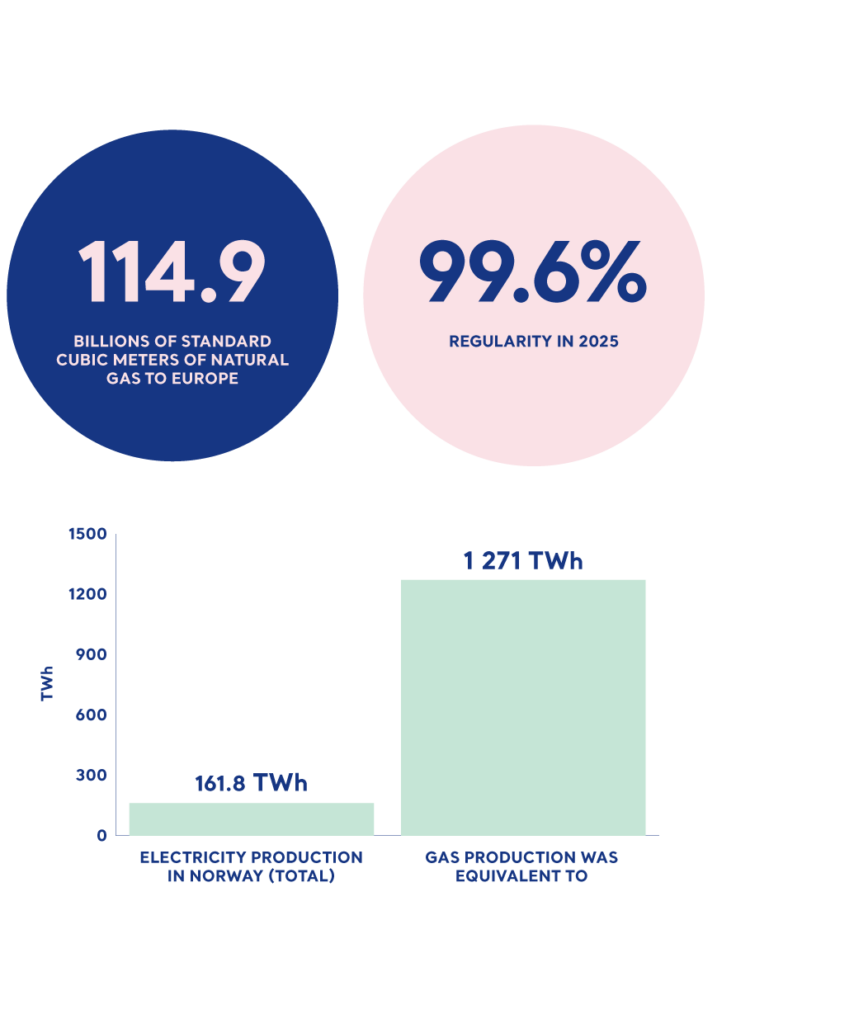
The scale is substantial. Each year, enormous volumes of natural gas are transported through the Norwegian transport system to Europe – amounting to 114.9 billion standard cubic metres in 2025. That corresponds to around 1,271 terawatt hours of energy, almost eight times Norway’s total electricity output in the same year. The volumes are so large that even minor disruptions can have major consequences. Regularity is therefore a key consideration and came in 2025 to 99.6 per cent. The Norwegian gas transport system delivers as planned almost the whole time, despite complex infrastructure, weather, maintenance and ongoing changes.
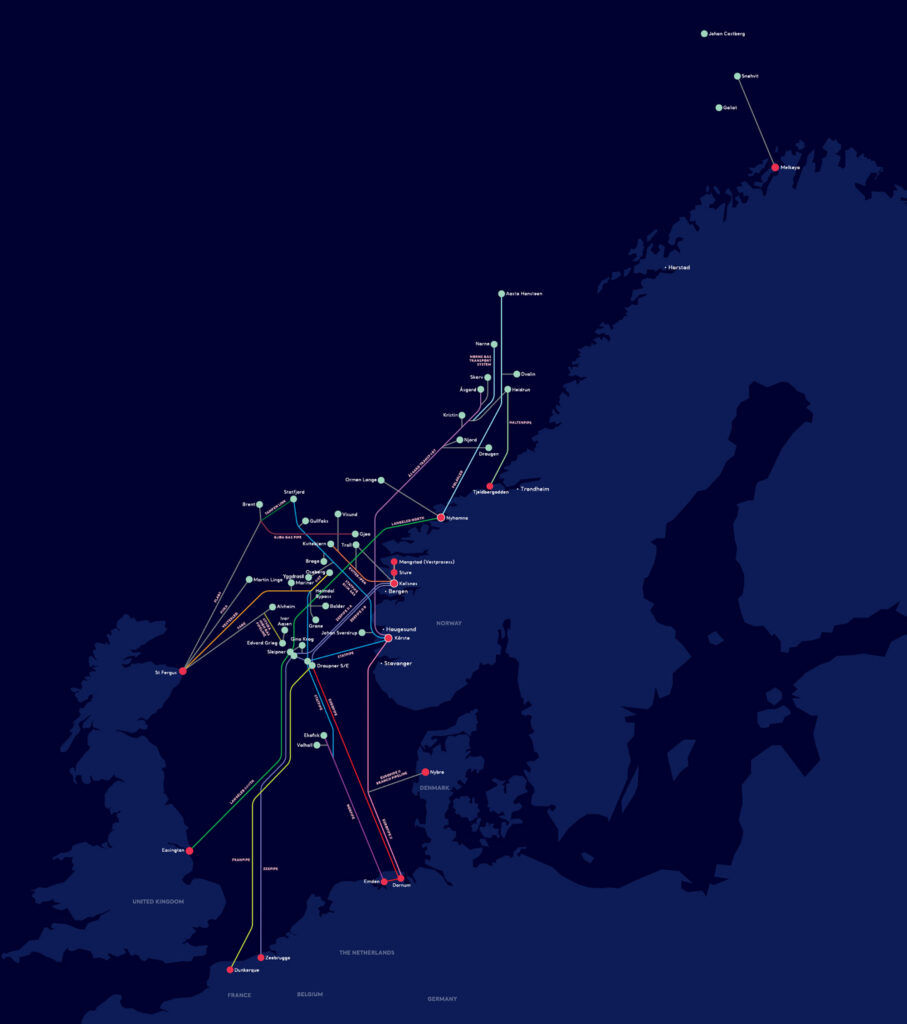
This network has been built over several decades and comprises an extensive infrastructure of pipelines, platforms, hubs, processing facilities and terminals. Around 70 fields deliver gas into it. Some is used to generate power offshore, some is injected into reservoirs, but most is sent on to Europe.
The onshore facilities at Kårstø, Kollsnes and Nyhamna process the gas before export. Dry gas is separated from liquids and prepared for transport to terminals in Germany, Belgium, France and the UK. Langeled, running from Nyhamna to Easington in northern England, ranks among the world’s longest subsea pipeline systems.
This physical machinery is in continuous interaction. From its headquarters in Karmøy north of Stavanger, Gassco monitors the system around the clock. Volumes are balanced, pressure is kept stable and quality is monitored. Gas flow demands precision at every stage, and Gassco has built up an expertise over 25 years which puts it among the world’s leaders for system operation of this kind.
The company owns neither the infrastructure nor the gas flowing through it. Its role is to ensure that the system functions – safely, efficiently and equitably – on behalf of its users. This neutrality is what makes the system predictable for everyone utilising it. Gassco has four assignments or mandates with regard to the transport system.
The first of these is the ordinary operator role. This involves responsibility for the day-to-day running of pipelines, platforms, processing facilities and terminals on behalf of the owners, to ensure that these facilities function safely and efficiently.
Collectively, the other three mandates make up a special operator role pursuant to the Petroleum Act, which relates not to individual assets but to the overall system. Gassco is required to ensure that the network functions as an integrated whole – from the fields offshore to customers in Europe.
The special operatorship comprises the following mandates:
1. Capacity management
Allocating transport capacity between users, following up nominations and ensuring that capacity is used equitably and predictably.
2. System operation
The daily balancing work of monitoring and managing gas flows, maintaining the right pressure and quality, and ensuring that gas is delivered in the right volume to the right place at the right time.
3. System architect
Developing long-term solutions for the transport system and advising the authorities on issues which require an integrated understanding of the infrastructure.
Overall, these responsibilities make it possible to deliver gas safely and predictably every single day.
The results are felt far beyond Norway’s borders. Ranked today as the world’s largest integrated offshore system, the gas network’s deliveries form a vital part of Europe’s energy supply. Each day, Norwegian gas helps to keep the lights on, industry running and society functioning.